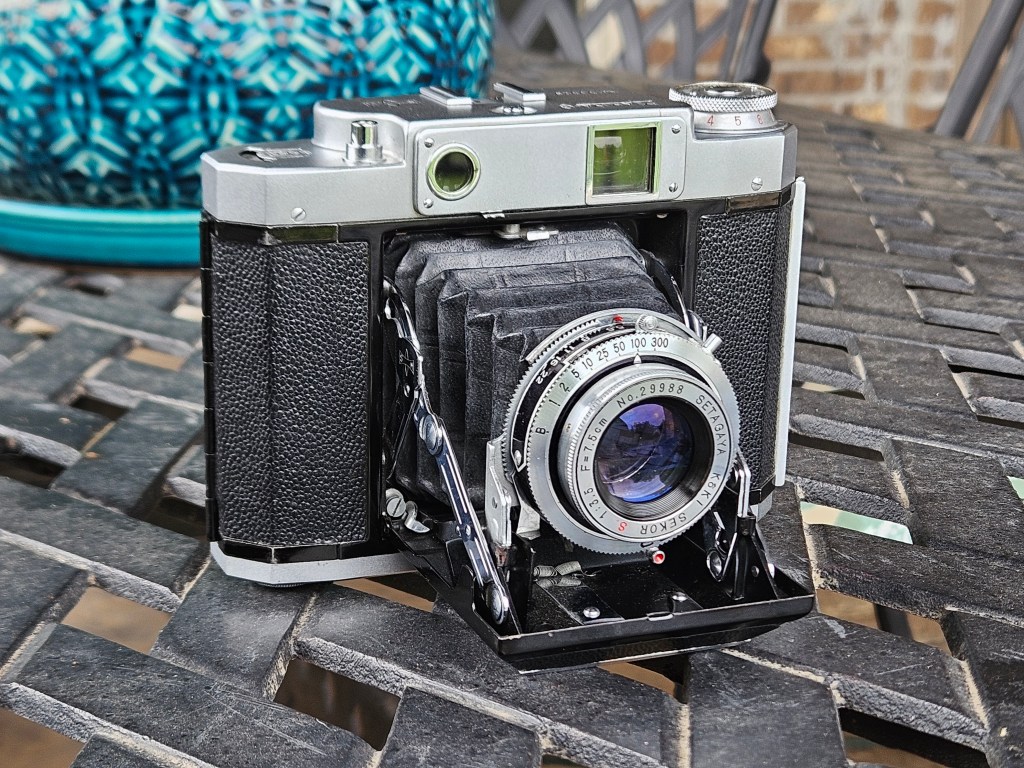
Since I have an interest in medium format cameras, and have always been drawn to folders, the Mamiya Six was one of the cameras I was anxious to try.
The Mamiya Six was made in many variations through the 1940s and 1950s. The one I have is a Mamiya Six V (as far as I can tell) so it’s a relatively late model, I would guess from the early 1950s. I also have a Zeiss Ikon 533/16, so I was comparing features as I used this Mamiya.
First, let me say, I think the Mamiya is a bit more complex to load than the Zeiss Ikon is. The later Mamiya models included an “Automat” version that appears to be simpler to load, but my model is a bit older, and not so simple.
Aside from the way the film loads, the Mamiya Six has another unique feature – that I’m not sure is used in any other camera. The Mamiya Six focuses by moving the film plane forward and backwards instead of moving the lens the way most cameras do.
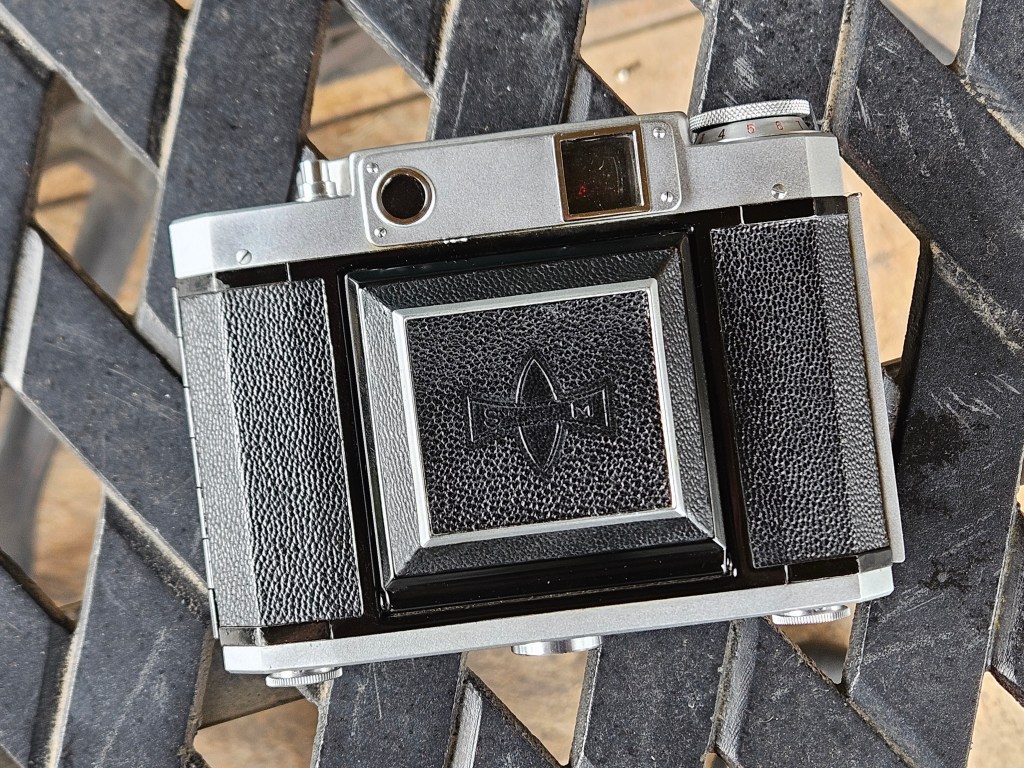
Below is an image of the front side of the Mamiya, folded/closed. These folders are relatively compact and easy to carry – which is one of the nice things about them.
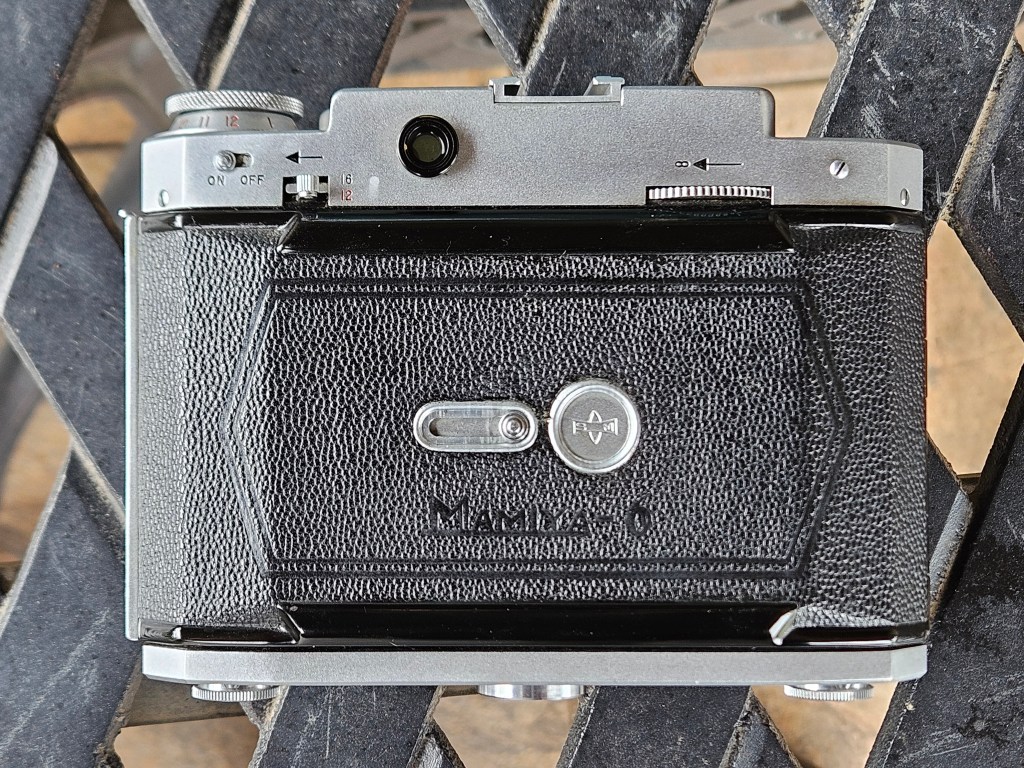
Next, here’s an image of the back of the Mamiya, with complex film loading/winding controls visible at the top left, behind the film winding dial. When you load film, you have to make sure the counter is on “1” or the count will be off, and you may not be able to shoot all 12 or 16 photos. Next you must flip the “on/off” switch to off, so the film advance will not advance the frame counter. After you connect the film leader to the spool, and wind it a few turns (until it’s securely attached) you close the cover and open the silver cover on the back to see the film backing as you crank. You continue to crank until you see “1” in the open viewing hole. Once you see the number “1” you flip the on/off switch to on, and you are ready to take your first shot.
This is not outrageously difficult or different from other medium format cameras of the time – but it just seems slightly more complicated. Of the 2 rolls that I shot, I don’t think either roll started on frame 1 – because I messed up and had to advance to frame 2 for both rolls. That’s something that I would, hopefully, get used to and not waste frames if I used it enough. Since 120 film is paper backed and doesn’t have sprocket holes or anything like that to help measure the frames, it’s a bit of an imperfect science and different cameras handle it differently. It seems that newer medium format cameras made use of the arrows on the backing paper and allowed the photographer to advance to a set point (when the arrow on the backing paper lined up with a dot or arrow on the camera, you stop and close the back and are ready to advance to frame 1). This camera is from before cameras started using that method to load – but that method works much better than watching for the number “1” in the small window, the old-fashioned way. In fact, it’s hard for me to even see the printing on the paper through the window, and I sometimes move right to frame “2” because I just have trouble seeing the “1”. I believe newer versions of the Mamiya Six make use of the arrow on the film backing paper when loading and are easier.
It seems that some of the later versions of this camera (mine included) allowed shooting 6×6 or 6×4.5 by changing 2 things. First there are small masks that flip up from behind the film spools on either side to mask the 6×6 opening to be 6×4.5 – they just fold up and over from both sides. When using it in 6×6 mode they fold back into the film spool areas and out of the way. If you decide to shoot 6×4.5, you must also change the film advance/counter, so it goes to 16 instead of 12. This is accomplished by moving the small knob at the top left over and up to 16. To shoot 6×6 again, move it over and down to 12. So, a bit complex to get everything working properly with a mechanical camera like this. Here’s a video on YouTube that shows exactly how to load the same model as I have – watch here. This shows the process, and although not extremely difficult, there are several things to remember – and if you don’t do them in the right order, things will not work properly. He also explains how to set the camera for 6×6 vs 6×4.5.
So, how does it work? Well, I have some shots below from my experimenting. Not all great, but you can see what they look like. I was especially interested in how (or how well) the focusing worked – since it is a bit different than most cameras. Shooting in 6×6 mode with Porta 400.
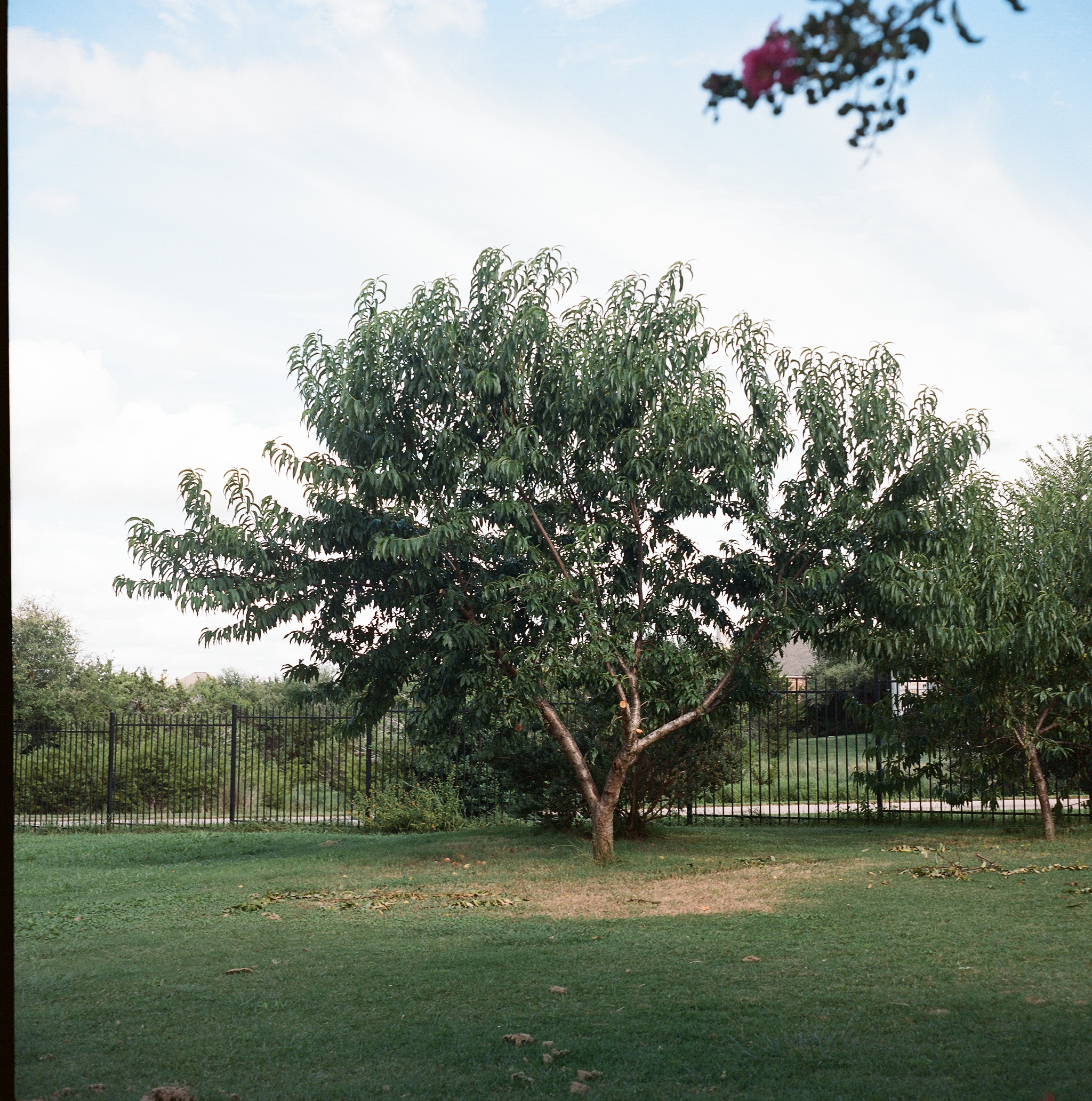
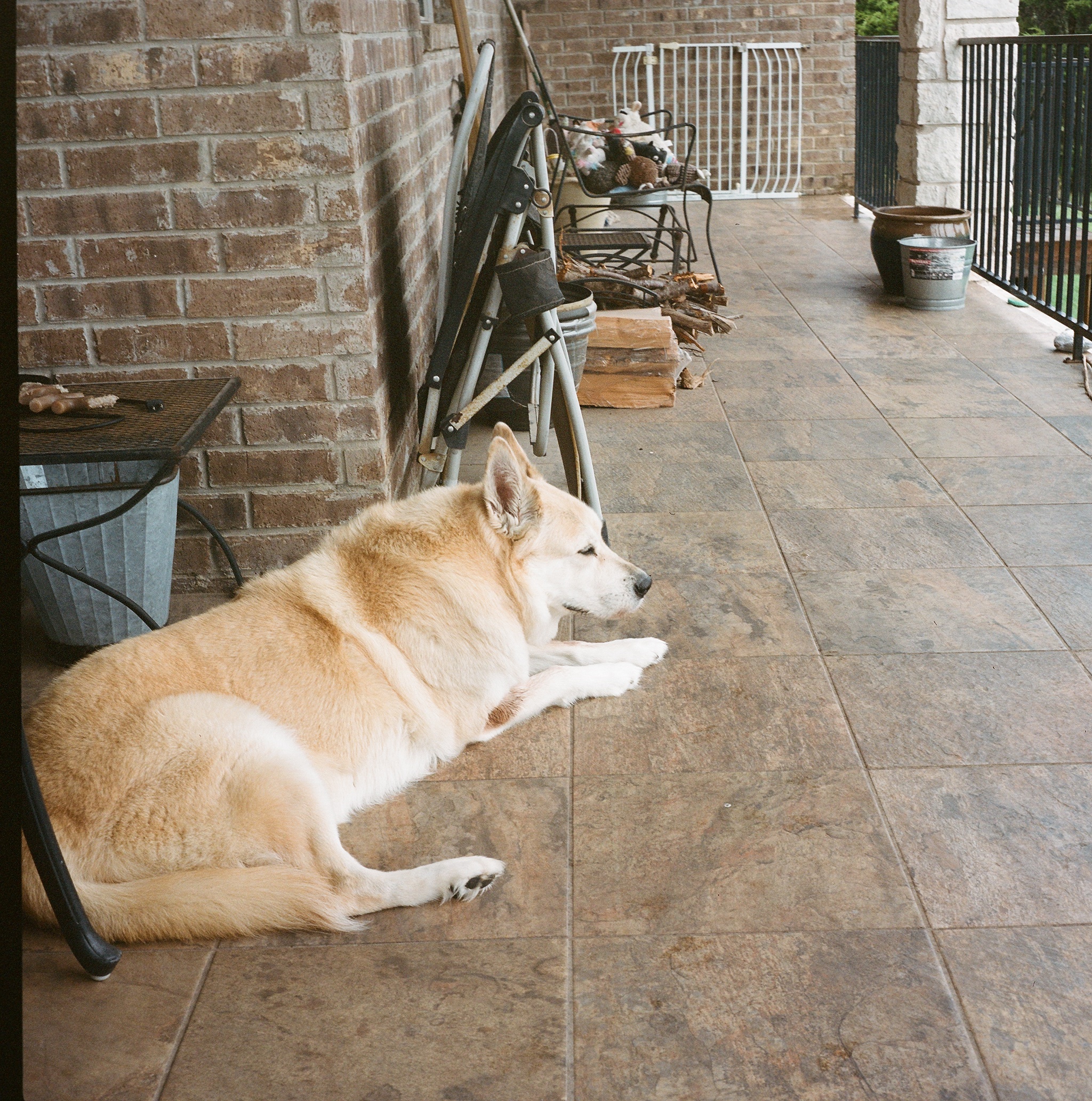

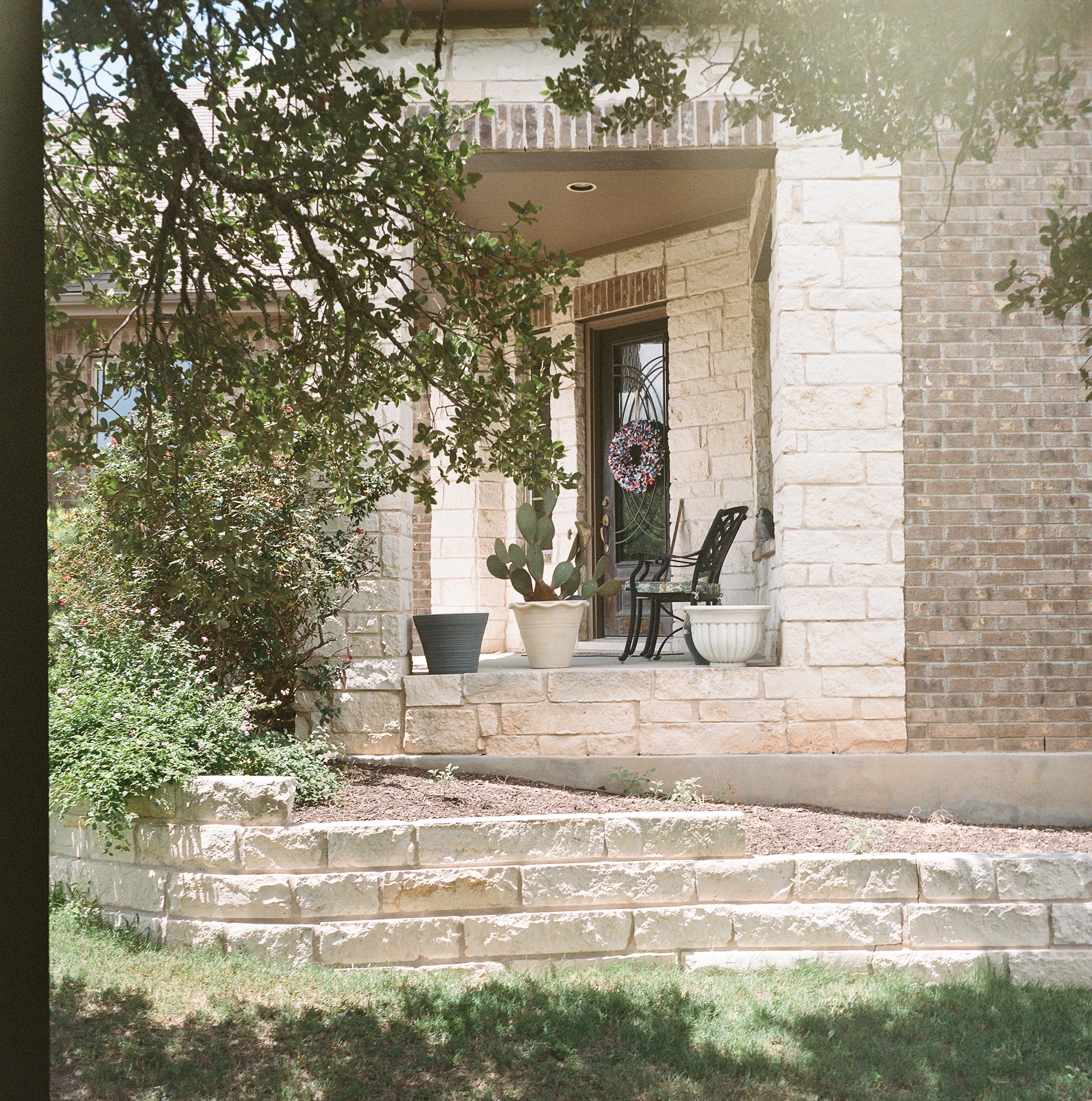

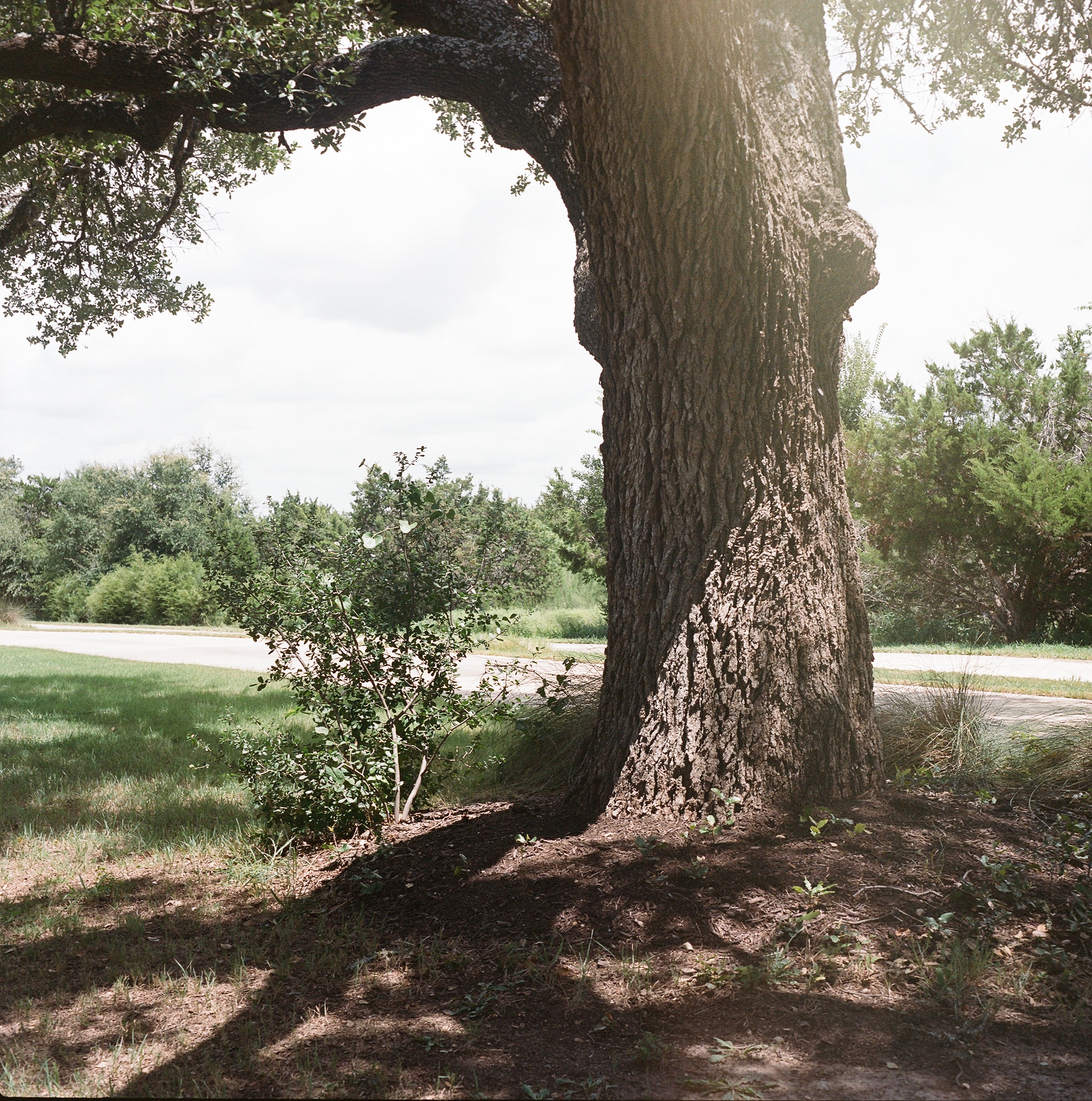
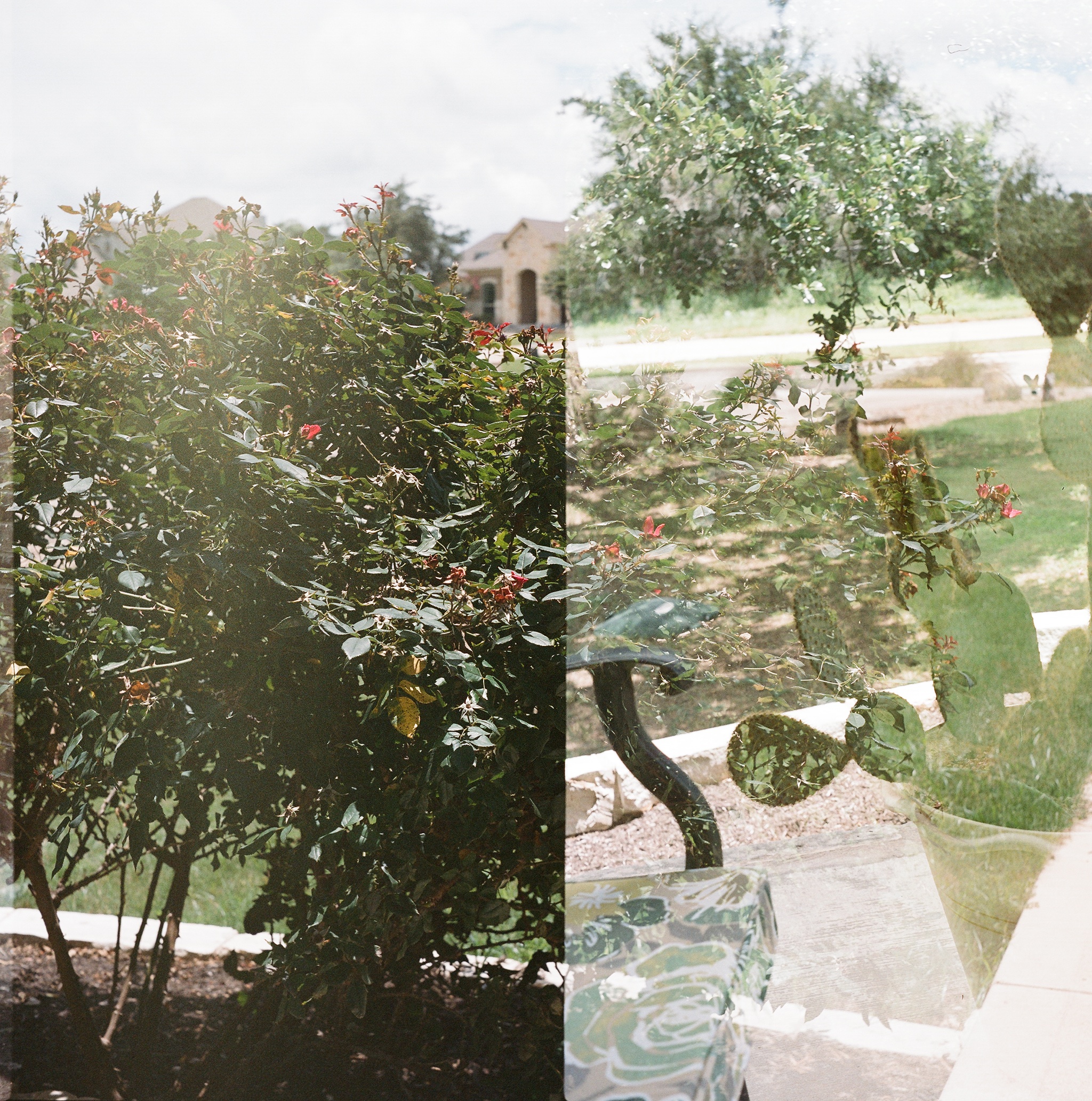
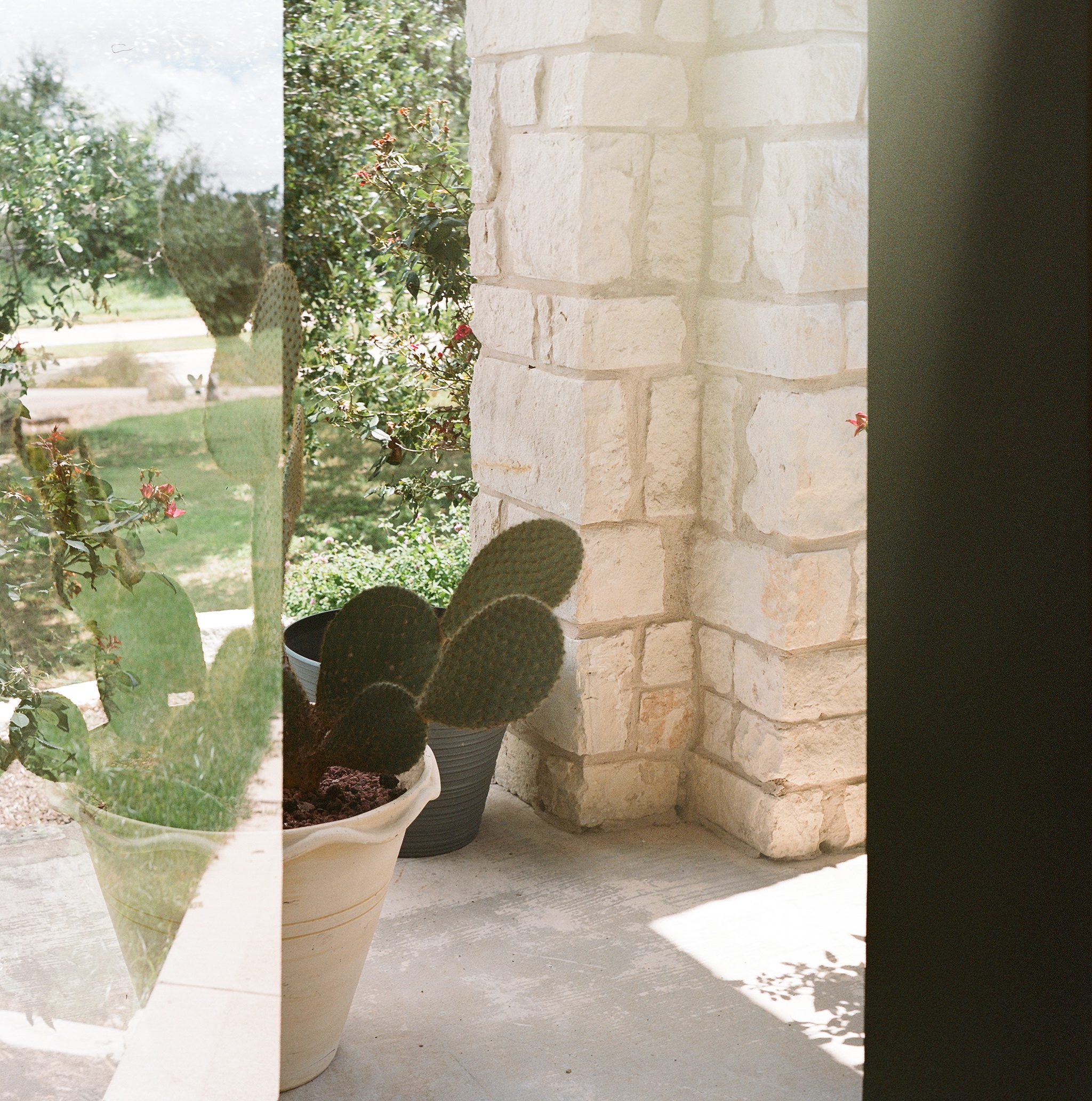
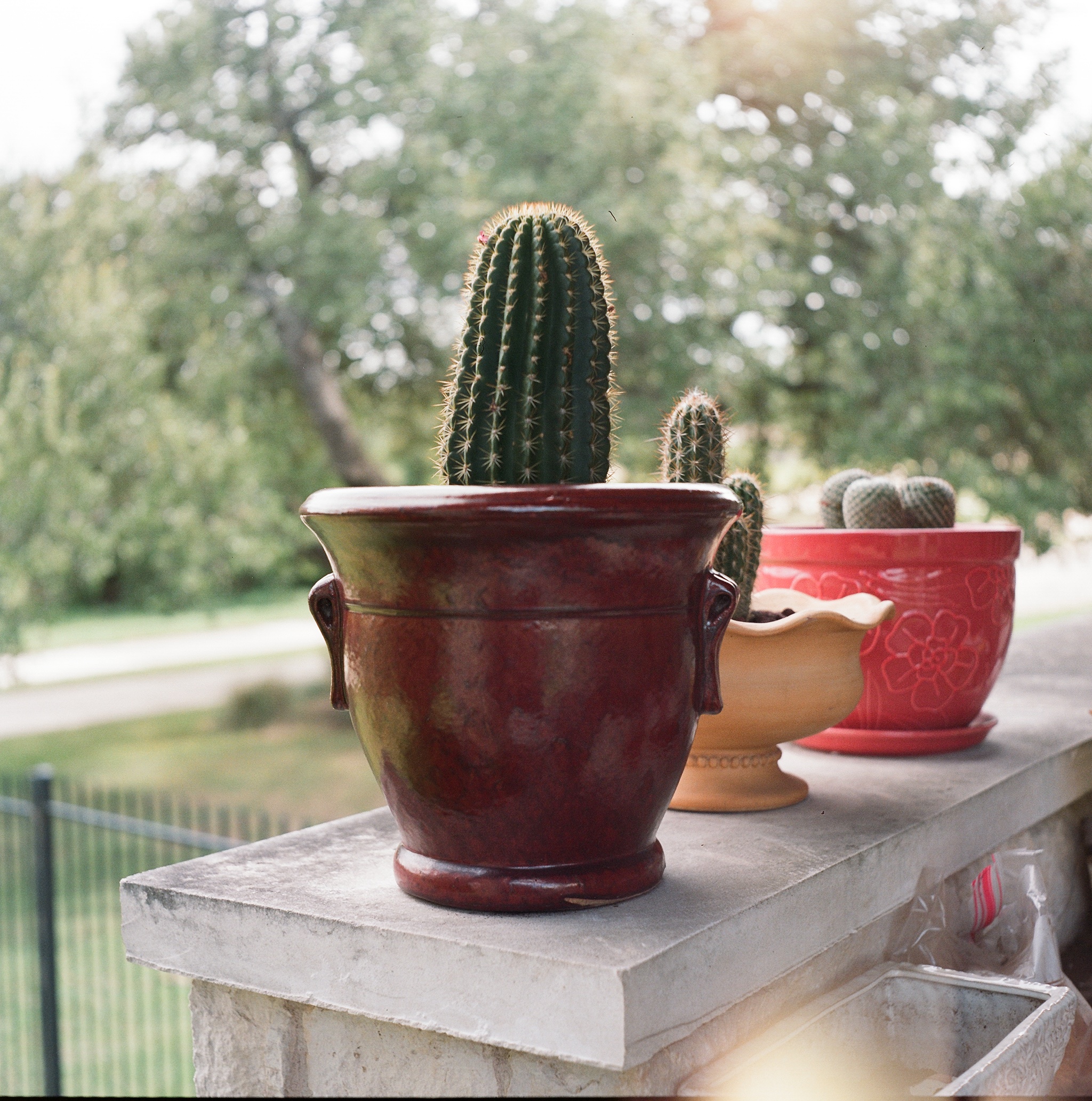
In general, I think the camera works well, however, focus was a little difficult, and I see a few photos that might show a bit of a light leak. You’ll also, notice a few double exposures – from having a little trouble loading. I don’t use this camera often, and probably won’t use it often… so, loading may always be an issue for me. It is a little different than many of the medium format cameras I use. But I think it’s normal to have a little trouble loading until you do it for a while. Otherwise, not a bad camera, and a little interesting because of the way it focuses by moving the focal plane instead of the lens.
 Mostly Film Photography (GotFilm.org)
You must be logged in to post a comment.