I’ve written quite a bit about medium format film cameras lately, and I’ve used my Zenza Bronica, Hasselblad and Mamiya cameras quite a bit – and I really like them, and the negatives they produce, but…
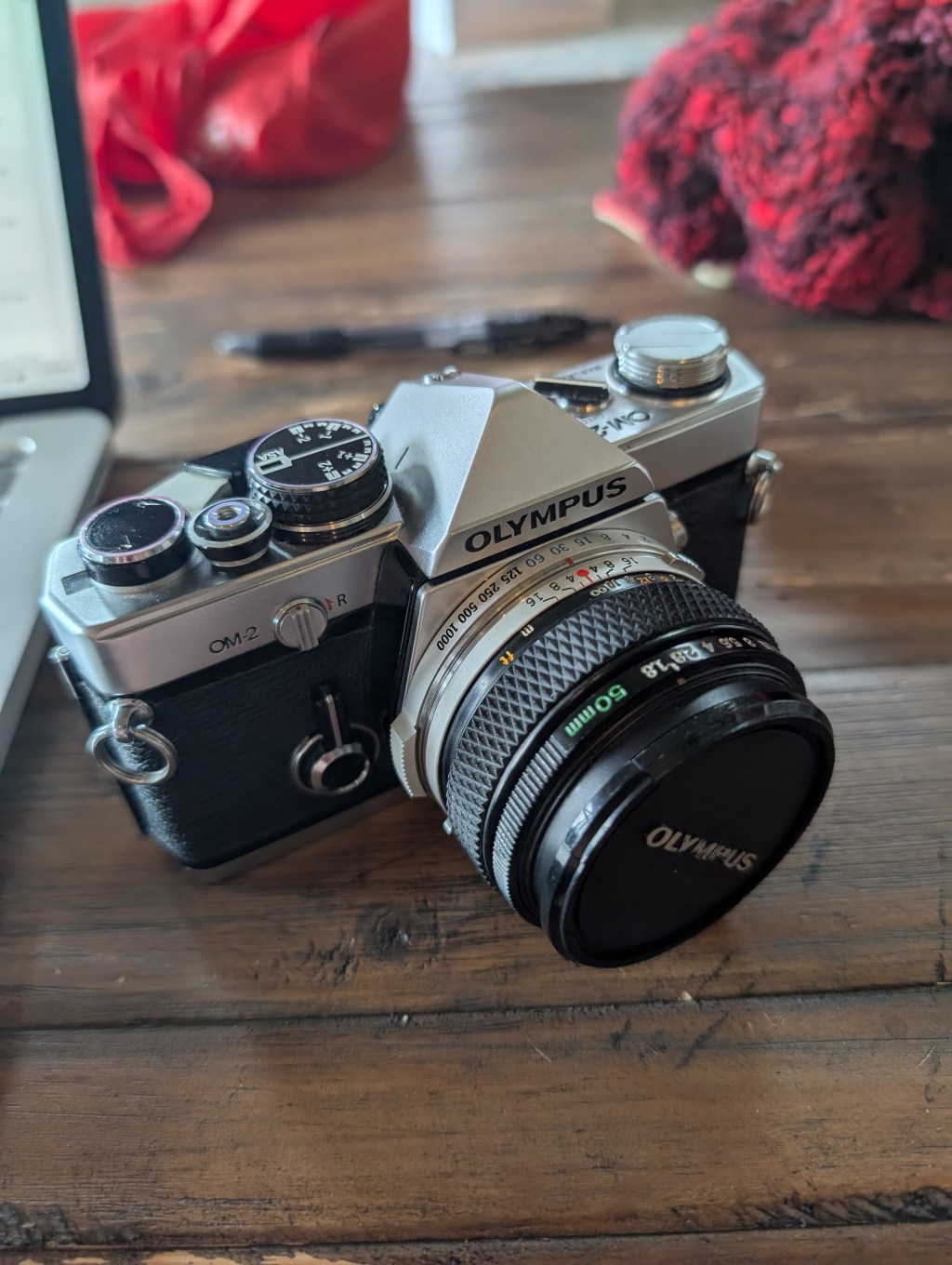
When I was in college taking art classes, studying photography, I fell in love with the Olympus OM cameras – which were new during my college years in the 1970s. The Olympus OM-1 and OM-2 were (in my opinion) primarily meant to compete with Nikon and Canon 35mm cameras. Olympus, at one point, was the official camera of UPI (competitor of AP). I remember being very drawn to their advertising, and how nice their cameras looked (their marketing people did a very good job). I spent a lot of time visiting camera stores, holding the OM-1, and thinking how nice it felt in my hands. And I was excited when I finally saved enough money to buy my first OM-1 with a 50mm f/1.8 lens!
Technical Note: Now it remains true that 35mm negatives are small, and medium format film should be able to produce a higher quality negative – a higher quality final result. However, a good quality 35mm negative can still produce a fairly high quality / high resolution scan (read what Ken Rockwell has said about film resolution). It’s a little trickier – since, with a smaller negative, all the factors are more critical – film type, lens, etc., can have larger negative impacts on image quality. I’m always interested in comparing film and digital images. Digital sensors are getting better and better, and digital resolution is getting higher and higher – but film is analog, so it’s hard to pin down an exact resolution – and many factors can affect the final result. Digital is a lot more exact, and maybe more consistent, as far as resolution goes. Remember, online discussions of technical topics like this can be old (like Ken Rockwell’s article I linked to above) so they may not be as valid now – or minimally the facts may be different now. Still, I like researching and comparing.
I prefer to use my OM-2 over my OM-1 (even though I still love my OM-1) mainly because the batteries used in the OM-2 are still easily available. The OM-1 batteries (mercury batteries) are no longer available. Although there are alternatives, they are a bit pricey and difficult to come by, and I don’t want to modify my OM-1 to accept modern batteries – I prefer to keep it as it was originally built – but maybe that’s just me. In case you’re not an OM person and don’t know, the OM-1 is completely manual – no auto exposure features – and it doesn’t require a battery to operate, except to power the light meter. The OM-2 is electronic (requiring batteries to operate) and has an aperture priority auto mode as well as a manual mode. I love the way the OM-2 switches between auto and manual modes – so the manual mode is truly manual, with a single needle, just like the OM-1. In aperture priority mode, the same needle is used to point to the shutter speed that will be used. I think it uses a very elegant way of accomplishing the mode change. Very analog, very simple, very nice. Moving the mode switch changes the display on the left side of the viewfinder (see below), and you can see the displayed needle and scale move in and out as you change the mode switch. Keep in mind, the exposure that’s displayed in the viewfinder is just an estimate. When you take actually take a photo, the meter measures light off the film (OTF) and sets the proper exposure at that time. It may, and frequently does, differ slightly from what was displayed in the viewfinder. The reading you have in the viewfinder can be biased – primarily by light entering through the viewfinder itself and corrupting the measurement.
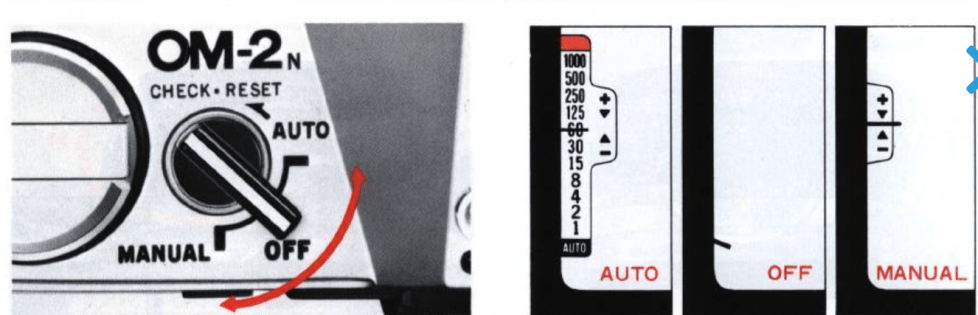
That being said, here’s more I like about the OM-2 and why I keep coming back to it.
First, the OM camera bodies just look good. They are very clean and simple, but very high quality. They feel and sound good. I like the electronics of the OM-2, and the aperture priority feature is simple. OTF metering seems to work well, and I like having an auto exposure mode sometimes – but use manual exposure most of the time, and that works exactly the same way as it does with the OM-1.
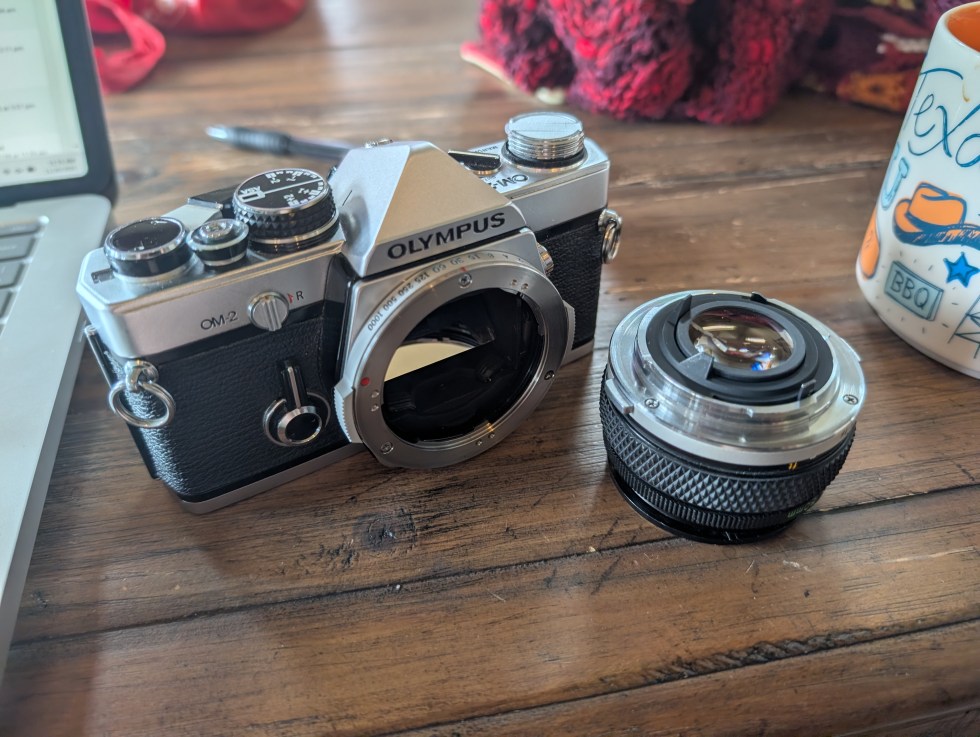
Both the OM-1 and OM-2 are small enough to fit easily into one hand. I don’t use flash much, so I leave the hot shoe off. The OM-1 and OM-2 have detachable hot shoes, and I like the more compact look/feel with it off. Also, it’s easier to hold in my hand without the hot shoe. I think this is a cool feature. Some people don’t, but I really like the way the camera looks without the hot shoe.
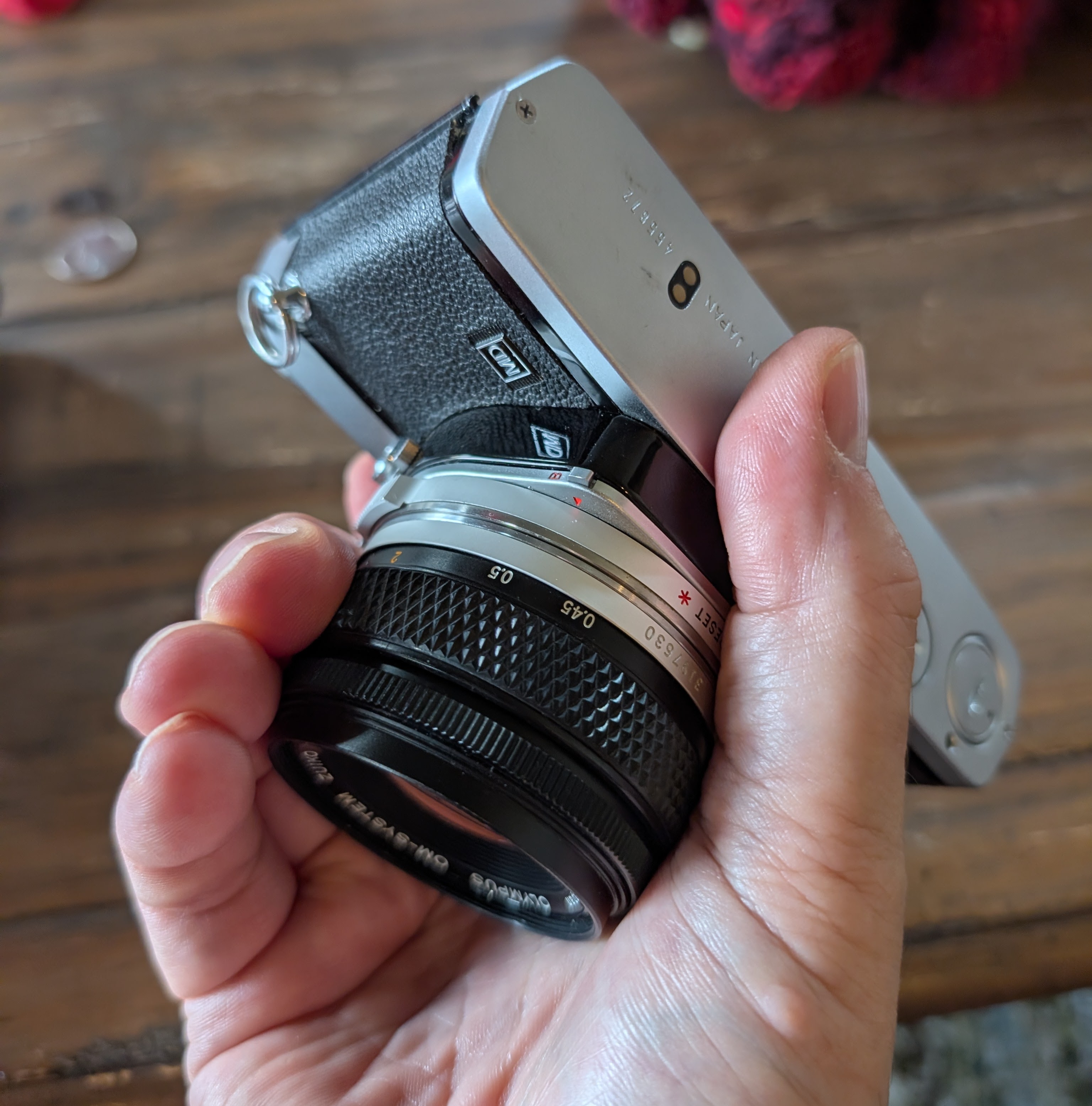
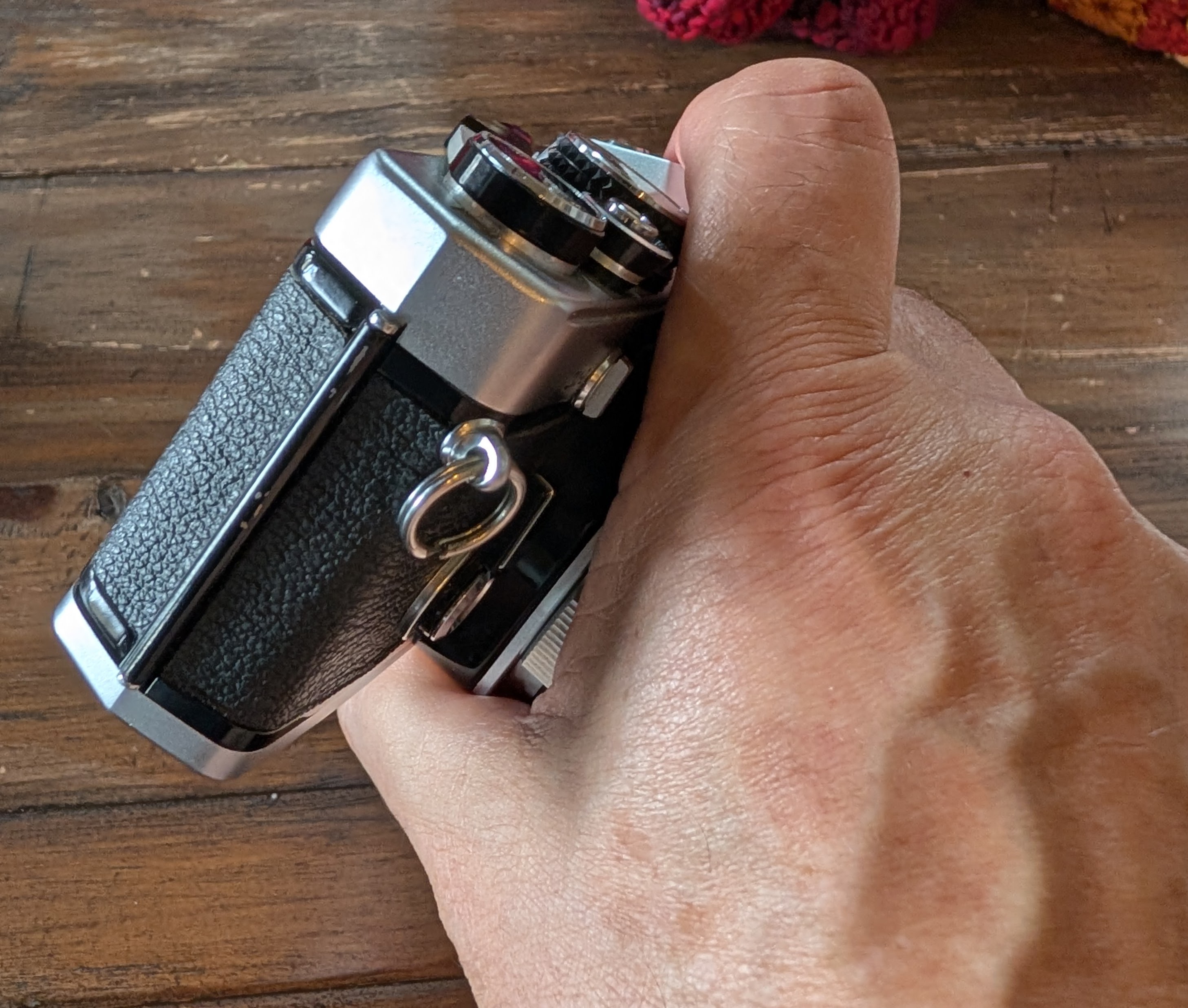
It’s a little harder to do this with larger Canon or Nikon cameras of the time (at least with my hand), but I love how easy it is to carry the OM-2 around in one hand.
Next, the cameras are built more like a fine watch than a camera. They just have a really good feel to them. The film advance is very smooth (not quite a smooth as the Nikon F3, but very nice). When you take a photo, the dampened shutter and mirror mechanism sounds extremely smooth, quiet and solid. In your hand, the camera feels (to me) like it’s carved or molded from a single piece of steel. As far as usability, they have nothing unnecessary, and everything is visible from the top (except the battery, and motor drive socket covers) so you can easily see everything just by looking down.
Third, I would say, is the lenses. To match the smaller OM bodies, Olympus designed a line of smaller lenses. They have a set of f/2 lenses (28mm, 35mm, 85mm, 100mm, maybe others) that people speak very highly of. I have a 35mm f/2 that is very nice. I also have 100mm f/2.8 that I really like. I also use a 50mm f/1.2, f/1.4 and f/1.8. They are all nice, but the 50mm f/1.8 lens is one of the most compact, and it’s also what I used in college, so it has some nostalgic value for me – and it was the least expensive at the time. Now, you can still find any of these lenses for a pretty good price. These lenses, when new, were very high quality and I think competed well with Nikon and Canon lenses of the time. Be careful buying these lenses now though because I find a lot of them have fog or other issues that can cause them to perform poorly. I’m very cautious of lenses that I find for sale that don’t specifically promise no fog or fungus internally. I own some that are less than perfect. Some were just on camera bodies that I wanted so I bought them together, but I don’t use these lenses. If you find one of these lenses that has clear and clean glass it should be capable of producing some very nice results. I only mention this because the OM lenses I see for sale seem to have a lot more fog/fungus issues than I find on other, similar, Canon or Nikon lenses. I’m not sure why, or if I’m just imagining this, but it seems like more of a problem with OM lenses.
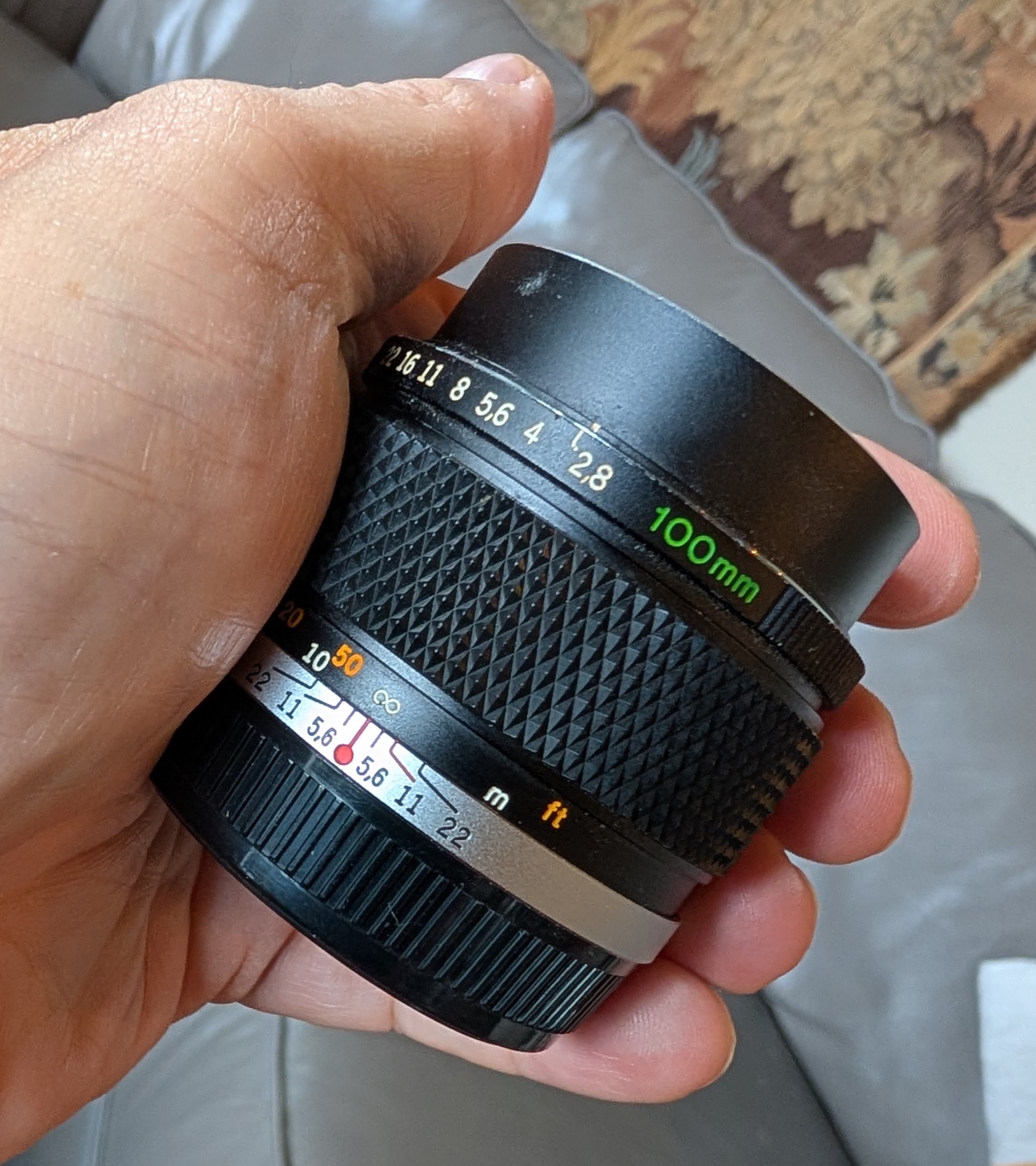
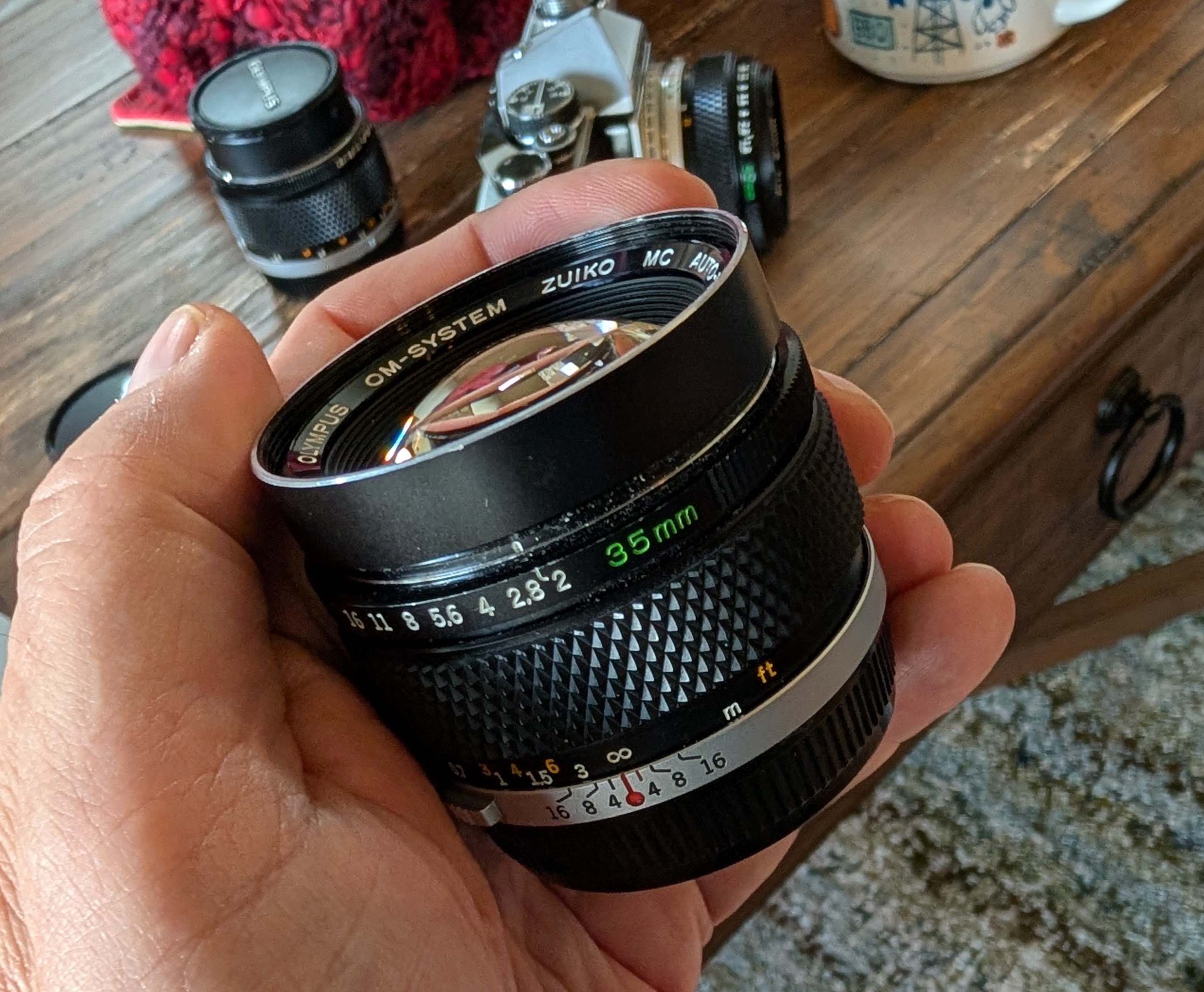
You’ll notice the older Zuiko lenses sometimes have a silver edge (silver nose) and many of these older lenses have single lens coatings. The newer ones generally have no silver and are multi-coated (some early multi-coated versions had “MC” on the lens, newer versions generally do not). You just have to pay attention to what you’re buying if you buy one of these online. There are many of the older, single coated, lenses selling for less than the newer ones. The multi-coated versions seem to do better looking directly toward the sun, for example, but the optical quality is very similar if not exactly the same in the older and newer versions.
There are many of these lenses available online. Here’s some detail about the various OM lenses (not exhaustive) that Olympus made, and another nice reference to Zuiko OM lenses by Phillip Reeve.
Now, I also collect Nikon and Canon cameras (among others) primarily from the same timeframe (70’s and 80’s). I really like the Nikons from this period – like the F2 and F3. The Olympus OM-1 and OM-2 were released early in the 70’s and I think were way ahead of their time. The OM-2 had electronics that were more advanced than anything Nikon or Canon had. I still like the build quality of the Nikons and Canons – but the OM-2 was special. I specifically like the OTF (Off-The-Film) metering feature built into the OM-2 (Olympus also built this feature into later versions, the OM-2sp, and the OM-3 and OM-4, OM-10 and others), and it was also found on the Pentax LX, but I don’t think it was really ever implemented on any other camera – maybe Minolta used this too, but I don’t know for sure. Here’s a nice description of the OM-1/2/3/4 on camera-wiki.org.

These kinds of features attracted me – but professional photographers didn’t much care about features like these. Their Nikons were their tools, and they weren’t swayed by fancy marketing like I was – they just needed to get a job done and were generally satisfied with what they already had.
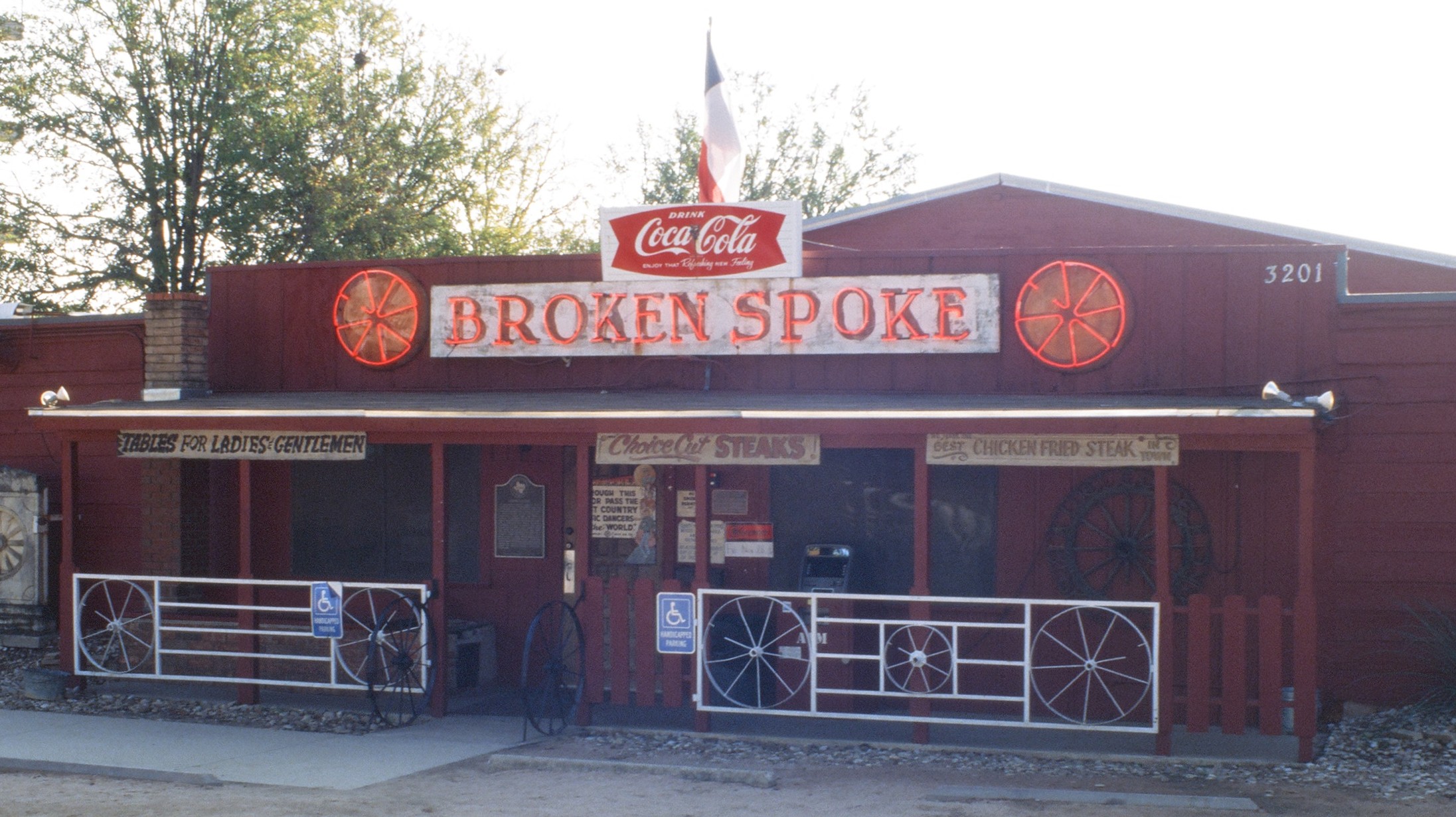
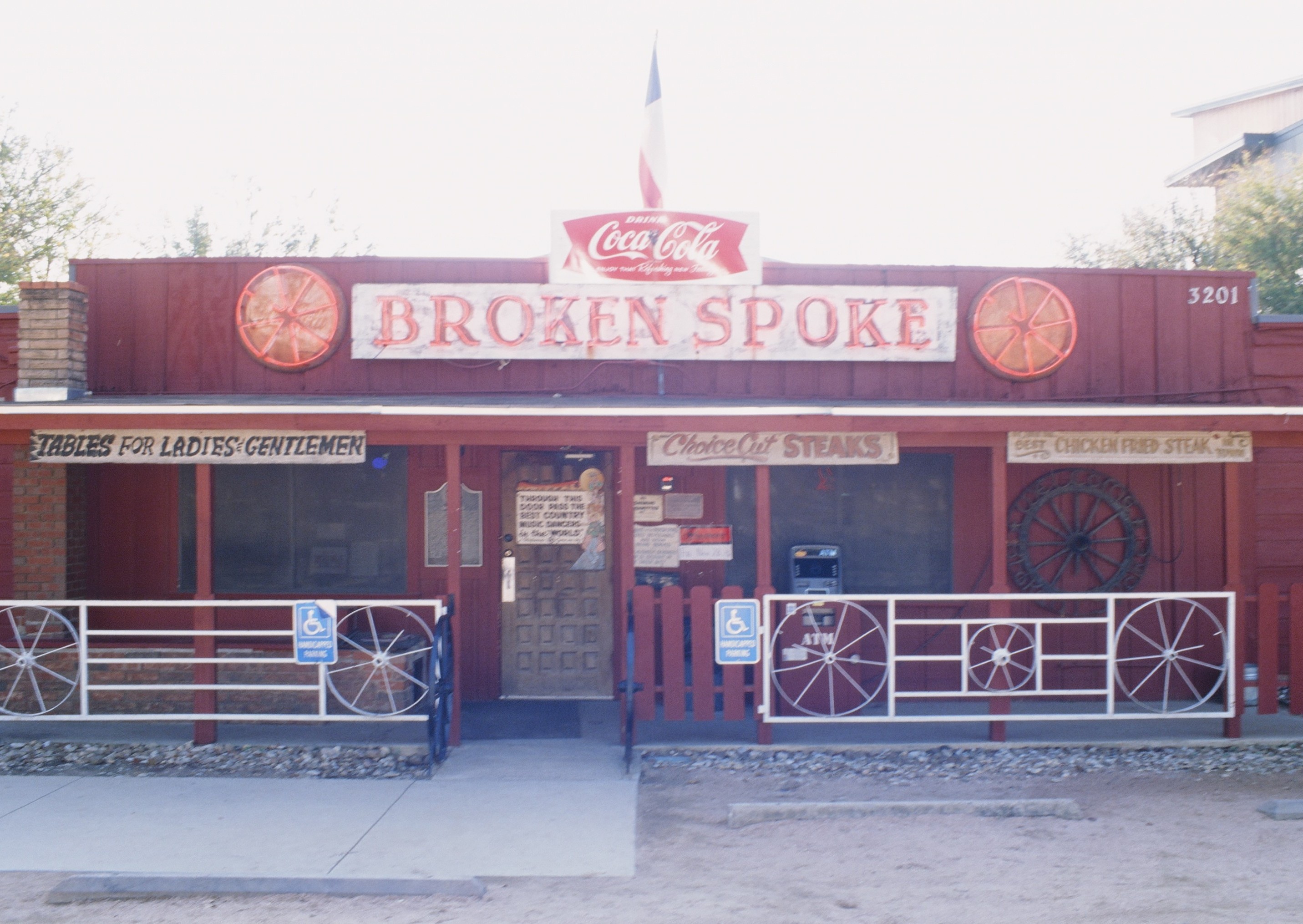
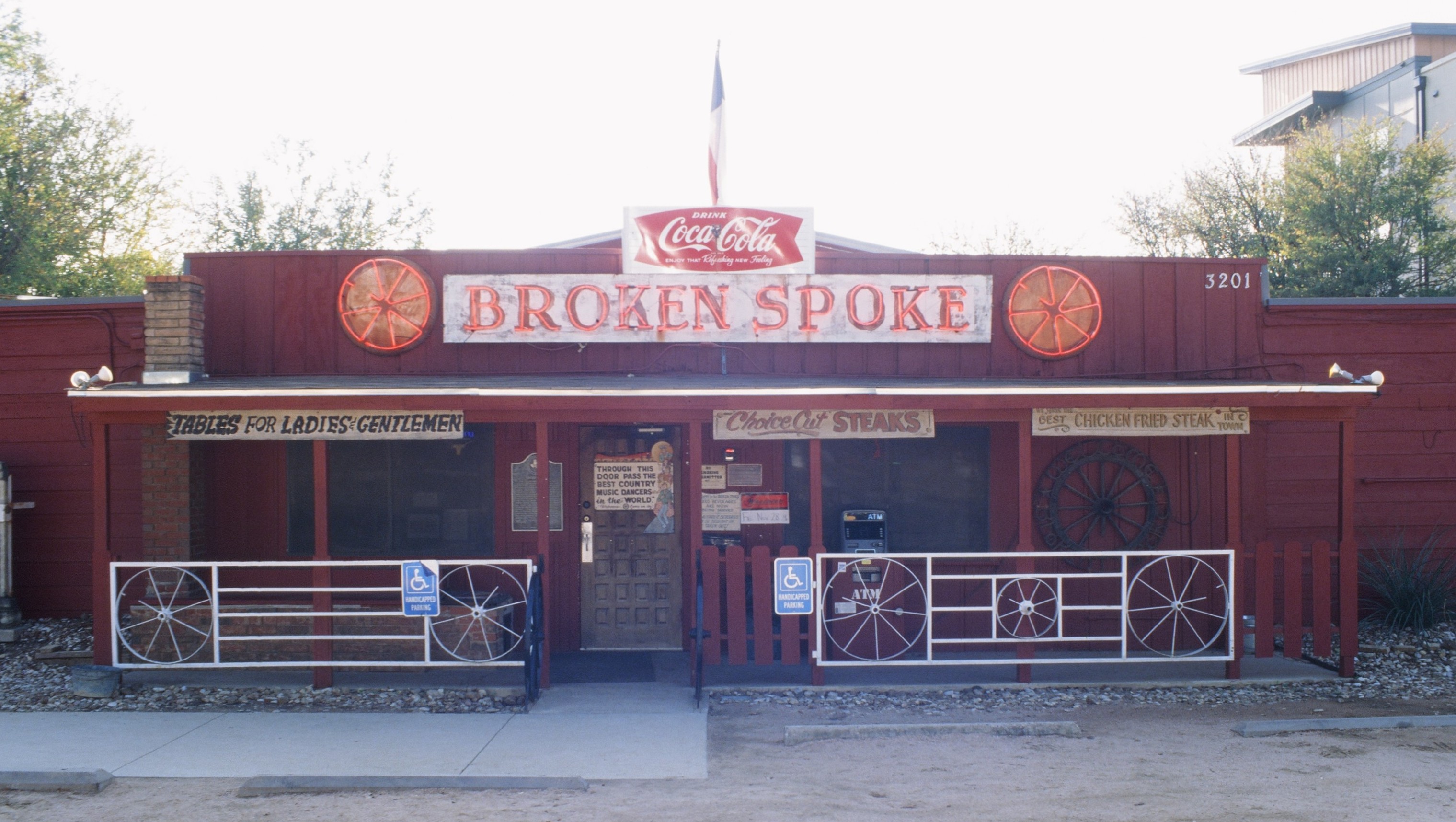
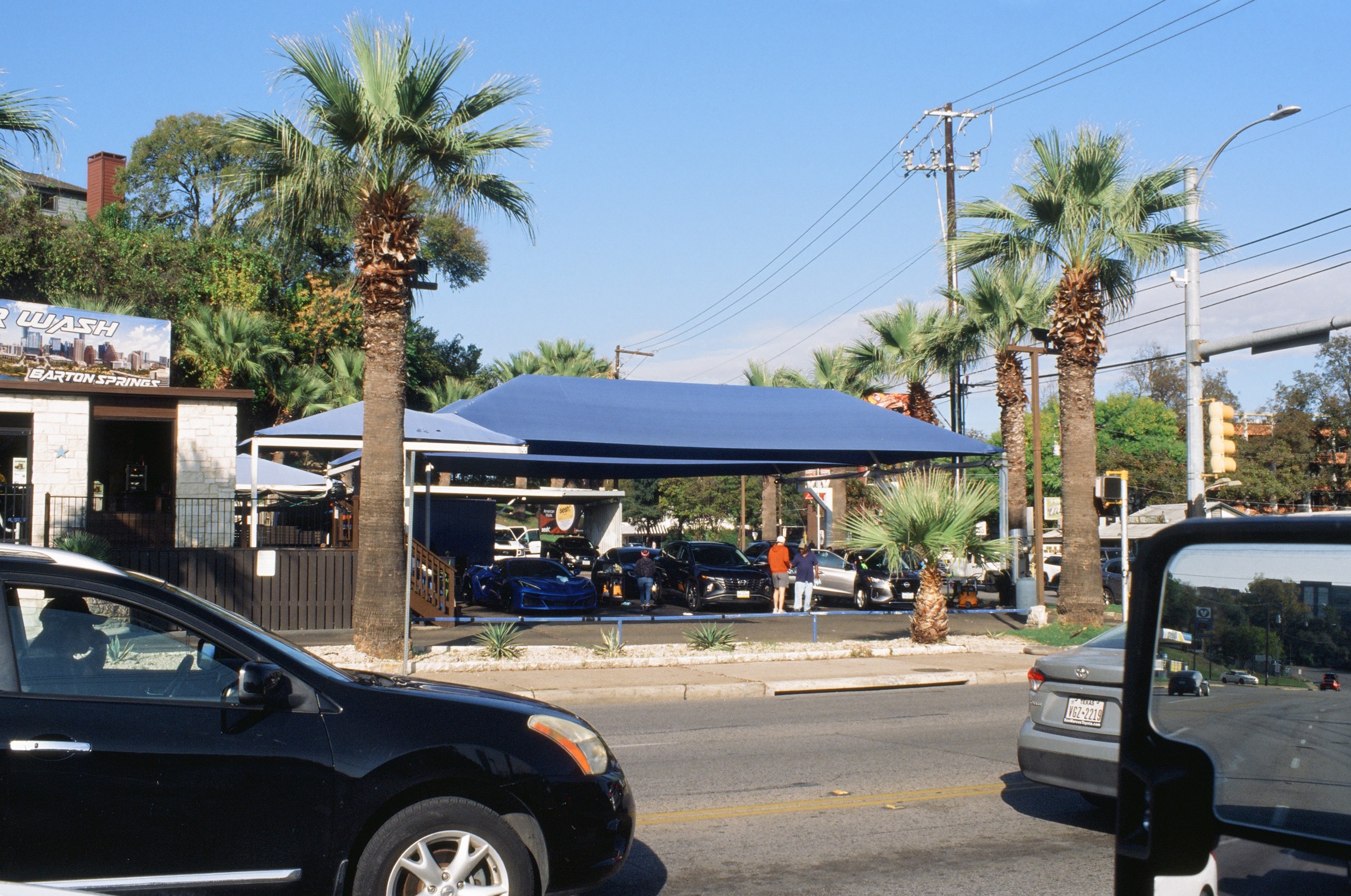
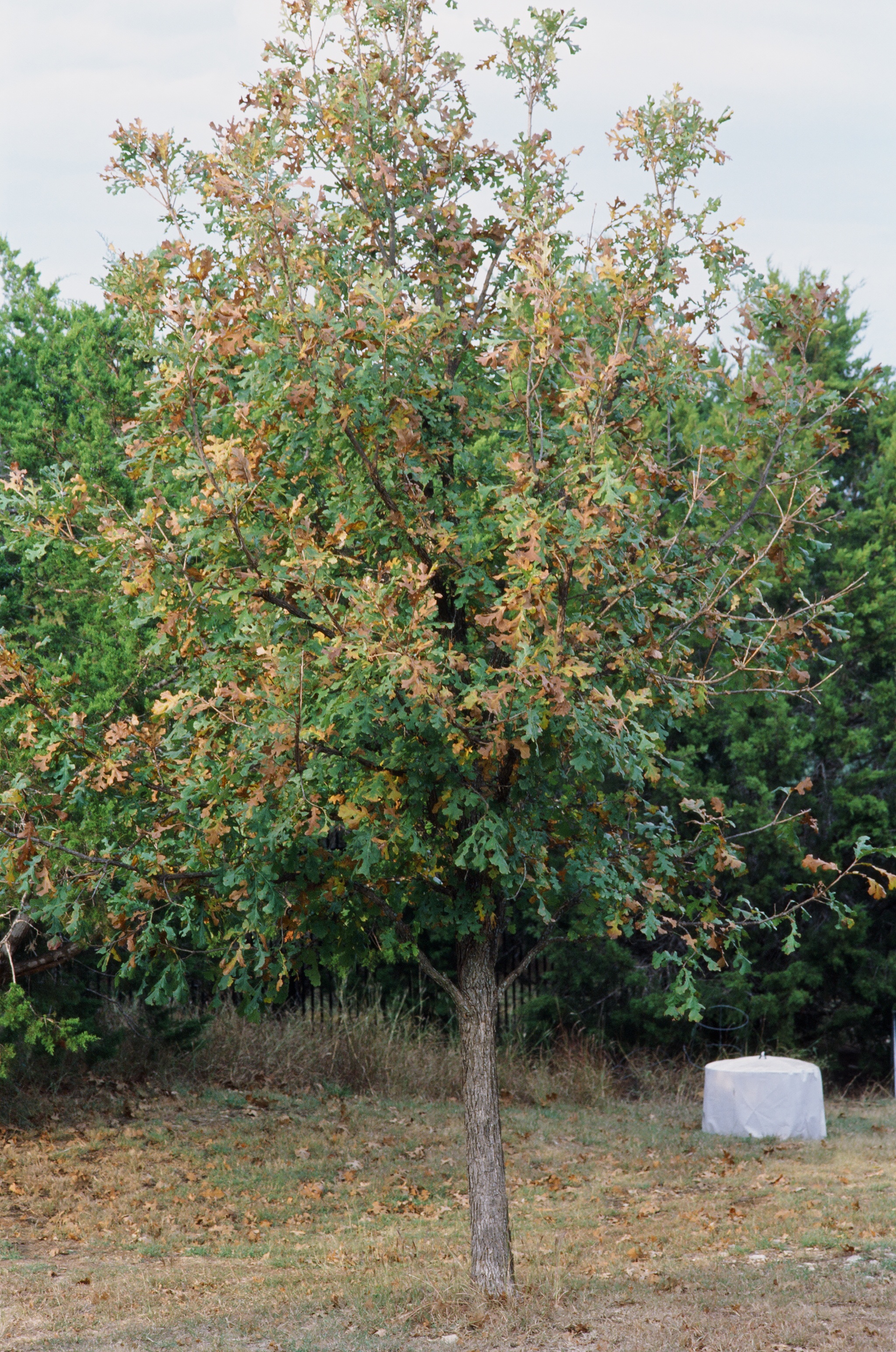
So, over the years, Nikon and Canon still exist, but Olympus is different – not the same company it once was. I have friends that still love the new Olympus digital cameras – but the OM’s, specifically the OM-2 will always be special to me. They were and still are amazing cameras. Here’s some results from my OM-2. I left these images pretty much as they were exposed – no post processing, except for straightening some. I like the way the OM-2 meters – it’s generally pretty accurate for such an old camera. The only ones that are tricky were the ones of “The Broken Spoke” since it was morning, and I was facing east, so the sun was pretty bright just above the building. I took a few shots and bracketed to get the best exposure. Other than that, no compensation was made. These were all shot on Ektachrome (E100) with my OM-2 and Zuiko 35mm f/2.0 lens.










 Mostly Film Photography (GotFilm.org)
You must be logged in to post a comment.